I found my poem again. On the net.
http://nonstandardized.com/privatethoughts/comments.php?id=159_0_1_0_C
http://nonstandardized.com/rachel/2004/08/bitter-sweet-first-love.html
I cried again. Not so much about him or even us, really. I know that story has ended. It ended so long ago. Longer than I cared to realize. But I cried for the girl I was. For that girl who was so in love. So trusting. So full of faith. I have no regrets. That girl has become part of me. And her tears have added and not diminished (as I said in a previous post). Today, what I need to learn is not so much how to love with all my heart but how to receive love in equal measure.
SEVEN YEARS LATER, DRIVING HOME
by Justine U. Camacho
It is impossible to fall in love again
for the first time.
The first blush, the heart quickening,
racing madly with a secret:
these things happen only once.
Yesterday, in the car,only half-listening to a song,
I remembered.
And in my mind, I turned around.
If I had known that I would never
see you again.
If I had known that afternoon in August,
I would have stayed rooted there.
Watching you.
Nineteen yet and dreamy.
I felt the years deaden me, one by one.
And all the headlamps around me
blurred.
It was so sweet,
even to feel
that wound again.
Thursday, September 23, 2004


Tuesday, September 14, 2004
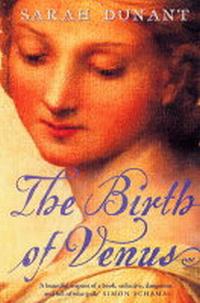
A Luscious Florentine Romance
"Looking back now, I see it more as an act of pride than kindness that my father brought the young painter back with him from the North that spring. The chapel in our palazzo had recently been completed, and for some months he had been searching for the right pair of hands to execute the altar frescoes. It wasn't as if Florence didn't have artists enough of her own. The city was filled with the smell of paint and the scratch of ink on the contracts. There were times when you couldn't walk the streets for fear of falling into some pit or mire left by constant building. Anyone and everyone who had the money was eager to celebrate God and the Republic by creating opportunities for art. What I hear described even now as a golden age was then simply the fashion of the day. But I was young then and, like so many others, dazzled by the feast."
An excerpt from Chapter One of "The Birth of Venus" by Sarah Dunant
I have had the singular luxury and pleasure to borrow this book over the weekend. It's lovely. Actually, the textures of the book reminded me of "The Girl with a Pearl Earring" (Tracy Chevalier's book as interpreted in a movie). However, in contrast to the Flemish setting of Chevalier, Florence is so much more lush (and worldly). I couldn't wait to get home every day and finish as many chapters as I could before my need for sleep pulled me away from it. There were a few poignant moments for me and I couldn't help crying in some chapters. Well, that's me. I'm such a crybaby.
What I loved about it was how particular it was. The family relationships were so real and deeply drawn that I couldn't help but be pulled into the drama. And yet at the same time, the gender issues were brought forth as well in the way that the heroine was so determined to do what she wanted in a world where there were so many feminine restrictions (yes, even in a city heady with passion, wealth and art). This part reminded me of "A Dangerous Woman" (how inaptly titled though I loved the film. It was about a famous Venetian courtesan named Veronica and how she fought a battle for herself and for all Venetian women with the choices that she made).
Anyway, I recommend this book especially to those who appreciate art and history (especially Florentine art and history), the feminine question and plain good old romance.
An excerpt from Chapter One of "The Birth of Venus" by Sarah Dunant
I have had the singular luxury and pleasure to borrow this book over the weekend. It's lovely. Actually, the textures of the book reminded me of "The Girl with a Pearl Earring" (Tracy Chevalier's book as interpreted in a movie). However, in contrast to the Flemish setting of Chevalier, Florence is so much more lush (and worldly). I couldn't wait to get home every day and finish as many chapters as I could before my need for sleep pulled me away from it. There were a few poignant moments for me and I couldn't help crying in some chapters. Well, that's me. I'm such a crybaby.
What I loved about it was how particular it was. The family relationships were so real and deeply drawn that I couldn't help but be pulled into the drama. And yet at the same time, the gender issues were brought forth as well in the way that the heroine was so determined to do what she wanted in a world where there were so many feminine restrictions (yes, even in a city heady with passion, wealth and art). This part reminded me of "A Dangerous Woman" (how inaptly titled though I loved the film. It was about a famous Venetian courtesan named Veronica and how she fought a battle for herself and for all Venetian women with the choices that she made).
Anyway, I recommend this book especially to those who appreciate art and history (especially Florentine art and history), the feminine question and plain good old romance.
Thursday, September 09, 2004
The Answering Yes
I thought I would love you forever--and, a little, I may,
in the way I still move toward a crate, knees bent,
or reach for a man: as one might stretch
for the three or four fruit that lie in the sun
at the top of the tree; too ripe for any moment but this,
they open their skin at first touch, yielding sweetness,
sweetness and heat,
and in me, each time since,
the answering yes.
from "The Answering Yes," by Jane Hirshfield, in her book of poetry, The October Palace, 1973.
Puzzling over love and the way one can love more than once in this lifetime, I realized that this poem answers some questions that have been stewing in my mind. To love is to say yes. To say yes more than once. To love is to remember every time you have said yes. And each yes is to increase and not diminish. Each yes is to sweeten the moment and not embitter.
If I were to live my life over again... I would still love the same people. I have no regrets. Each love built me into the person I am. And if I have finally chosen one love to share the rest of my life, it also means that all my past loves have led me to this moment.
"I thought I would love you forever..." How poignant. Perhaps each time we say yes, we feel that it encompasses forever. It takes time and wisdom, I guess, to be able to say that love does not end (because at the moment of separation, the world does seem to end). It does not end, because it allows you to say yes. To reach out once more, knowing all the consequences and pain, to love.
in the way I still move toward a crate, knees bent,
or reach for a man: as one might stretch
for the three or four fruit that lie in the sun
at the top of the tree; too ripe for any moment but this,
they open their skin at first touch, yielding sweetness,
sweetness and heat,
and in me, each time since,
the answering yes.
from "The Answering Yes," by Jane Hirshfield, in her book of poetry, The October Palace, 1973.
Puzzling over love and the way one can love more than once in this lifetime, I realized that this poem answers some questions that have been stewing in my mind. To love is to say yes. To say yes more than once. To love is to remember every time you have said yes. And each yes is to increase and not diminish. Each yes is to sweeten the moment and not embitter.
If I were to live my life over again... I would still love the same people. I have no regrets. Each love built me into the person I am. And if I have finally chosen one love to share the rest of my life, it also means that all my past loves have led me to this moment.
"I thought I would love you forever..." How poignant. Perhaps each time we say yes, we feel that it encompasses forever. It takes time and wisdom, I guess, to be able to say that love does not end (because at the moment of separation, the world does seem to end). It does not end, because it allows you to say yes. To reach out once more, knowing all the consequences and pain, to love.
Thursday, September 02, 2004
Meditation at Lagunitas
Below is one of my favorite poems. It combines my poetic concern for both the abstract and the particular. And at the same time, it touches on the numinous... the nature of love and humanity that so easily slips one's grip. And of course, I love the poem's dramatic ending: the repetition of blackberry that makes one imagine the tart-sweet flavor of an afternoon that has faded into the past but cannot be forgotten. I only regret that it is not so particular to me. I imagine myself reciting the ending as "mansanitas, mansanitas, mansanitas" in a slow, delicious, if not slightly more musical cadence.
Meditation at Lagunitas
All the new thinking is about loss.
In this it resembles all the old thinking.
The idea, for example, that each particular erases
the luminous clarity of a general idea. That the clown-faced woodpecker probing the dead trunk
of that black birch is, by his presence,
some tragic falling off from a first world
of undivided light. Or the notion that,
because there is in this world no one thing
to which the bramble of blackberry corresponds,
a word is elegy to what it signifies.
We talked about it late last night and in the voice
of my friend, there was a thin wire of grief, a tone
almost querulous. After a while I understood that,
talking this way, everything dissolves: justice,
pine, hair, woman, you and I. There was a woman
I made love to and I remembered how, holding
her small shoulders in my hands sometimes,
I felt a violent wonder at her presence
like a thirst for salt, for my childhood river
with its island willows, silly music from the pleasure boat,
muddy places where we caught the little orange--silver fish
called pumpkinseed. It hardly had to do with her.
Longing, we say, because desire is full
of endless distances. I must have been the same to her.
But I remember so much, the way her hands dismantled bread,
the thing her father said that hurt her, what
she dreamed. There are moments when the body is as numinous
as words, days that are the good flesh continuing.
Such tenderness, those afternoons and evenings,
saying blackberry, blackberry, blackberry.
--Robert Hass
Meditation at Lagunitas
All the new thinking is about loss.
In this it resembles all the old thinking.
The idea, for example, that each particular erases
the luminous clarity of a general idea. That the clown-faced woodpecker probing the dead trunk
of that black birch is, by his presence,
some tragic falling off from a first world
of undivided light. Or the notion that,
because there is in this world no one thing
to which the bramble of blackberry corresponds,
a word is elegy to what it signifies.
We talked about it late last night and in the voice
of my friend, there was a thin wire of grief, a tone
almost querulous. After a while I understood that,
talking this way, everything dissolves: justice,
pine, hair, woman, you and I. There was a woman
I made love to and I remembered how, holding
her small shoulders in my hands sometimes,
I felt a violent wonder at her presence
like a thirst for salt, for my childhood river
with its island willows, silly music from the pleasure boat,
muddy places where we caught the little orange--silver fish
called pumpkinseed. It hardly had to do with her.
Longing, we say, because desire is full
of endless distances. I must have been the same to her.
But I remember so much, the way her hands dismantled bread,
the thing her father said that hurt her, what
she dreamed. There are moments when the body is as numinous
as words, days that are the good flesh continuing.
Such tenderness, those afternoons and evenings,
saying blackberry, blackberry, blackberry.
--Robert Hass
Subscribe to:
Posts (Atom)